The Hole and the Garden
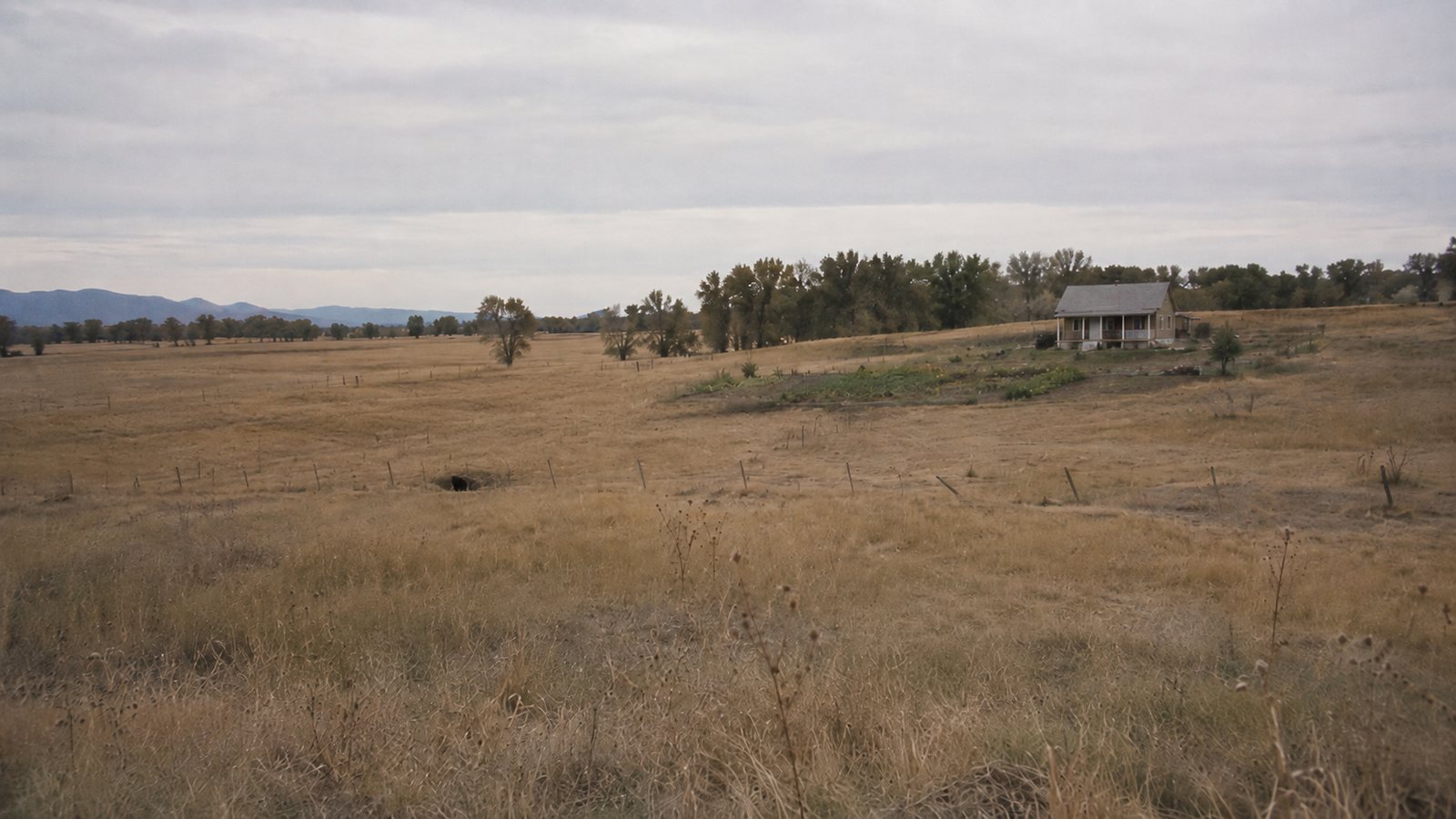
When people draw grief, they draw a hole. A pit, a dark place you fall into and then have to climb your way back out of.
It is not a wrong picture. It is half of one.
My husband Dan died suddenly in June 2023, and nearly everything I write here comes out of the years since. The same few words show up in almost every piece: the hole, the garden, the landmarks, the water, the container. Read this once and the rest will make more sense.
What is the hole and the garden?
It is how I map grief. A loss makes a hole that does not close, and a garden keeps growing around it. You live in both at once.
Does the hole ever close?
No.
A loss opens a hole in the ground of your life. It does not get smaller with time, whatever you have been promised. If you have been waiting for yours to fill in, nothing is wrong with you. It was never going to.
One loss, one hole. A field can hold more than one, and some of them belong to losses nobody else counts, a divorce, an estrangement, a version of yourself you were glad to leave behind. I wrote about those in The Hole I Walked Past. When a group of people lose the same person, each of them has their own hole for that person, in gardens that sit side by side.
What is the garden?
Around the hole there is a garden. It is everything that goes on growing while the hole stays open: a friend at the door, the morning your body wants coffee again, a laugh that catches you before you can decide whether you are allowed it. It is the rest of your life, still alive, growing right up to the edge, and it owes the hole nothing, least of all a bright side.
Why does grief come and go?
Grief moves you between the two, down to the edge of the hole and back out into the garden, sometimes over months and sometimes inside one afternoon. Two grief researchers, Margaret Stroebe and Henk Schut, named that movement oscillation in 1999, and a nervous system knows how to do it long before you trust it to. Most people I sit with have been apologizing for the back and forth. It is one of the healthiest things a grieving body does.
What is a grief landmark?
Scattered through the field are grief landmarks, places where the ground opens onto a hole. A street corner, a date on the calendar, a song in a grocery store, a notification on your phone. Some ambush you in the middle of an errand, and some you go to on purpose, knowing what is there. With time you start to feel some of them coming, the ground giving a little under your feet before it opens. I call that hollow ground.
Why does a new loss bring up an old one?
Because every loss you carry runs in the same current.
Grief moves. I think of its energy as water, fast and strong and looking for somewhere to go, and there is only one water, which is why a small new loss can bring an old one up with it. When nothing holds the water, it spins, and a whirlpool can pull you under anywhere in the field, nowhere near a hole.
What is a grief container?
The field can have edges, and I call every one of them the container. Banks let the water run hard without taking the garden with it. Fence lines lead you home in the dark. The container is usually made of small things, a slower calendar, a friend who knows the date is coming, a practice you do before the hard day instead of after. None of it makes the grief smaller. What it does is give the water somewhere to run that is not straight through the middle of your life.
For a long time the alcohol was my edge, a dam rather than a bank. It held everything back and watered nothing, and when it gave way, it gave way all at once.
Is there anywhere to rest in grief?
Somewhere in the field there is a house, where the body gets to rest. Some of its rooms stay closed for a long time and open when your body is ready, and not before. Sometimes the house is a real place, with walls and a door. Sometimes it is people, the ones you can rest with.
More questions
Does grief ever end?
No season ends the grief, and you will not find an other side of this field. You can learn it, though. Every piece I post is written from somewhere inside it.
Is the hole and the garden a stage model?
No. Grief does not run in order, and nobody graduates out of the hole. The field is a map of where you might be standing on any given day.
Where does the hole and the garden come from?
From my own grief, and from the years since of writing and of sitting with other people in theirs. The nearest earlier picture is Lois Tonkin's 'growing around grief,' from 1996, where the grief stays the same size and the life around it grows. The Hole and the Garden is also the title of my book, which is on its way.
You were never meant to grieve alone.
Draw the garden too.
I work with people one to one. Companioning is an hour a week on video, for as long as it is useful, and it starts with a free half hour. Book the half hour.
The working library behind these pieces is The Container, five dollars a month.